
Research Glossary — Hati Peptides
Quick-reference guides for research peptides. Each entry covers what the peptide is, how it works in research models, and where to source it for your laboratory.
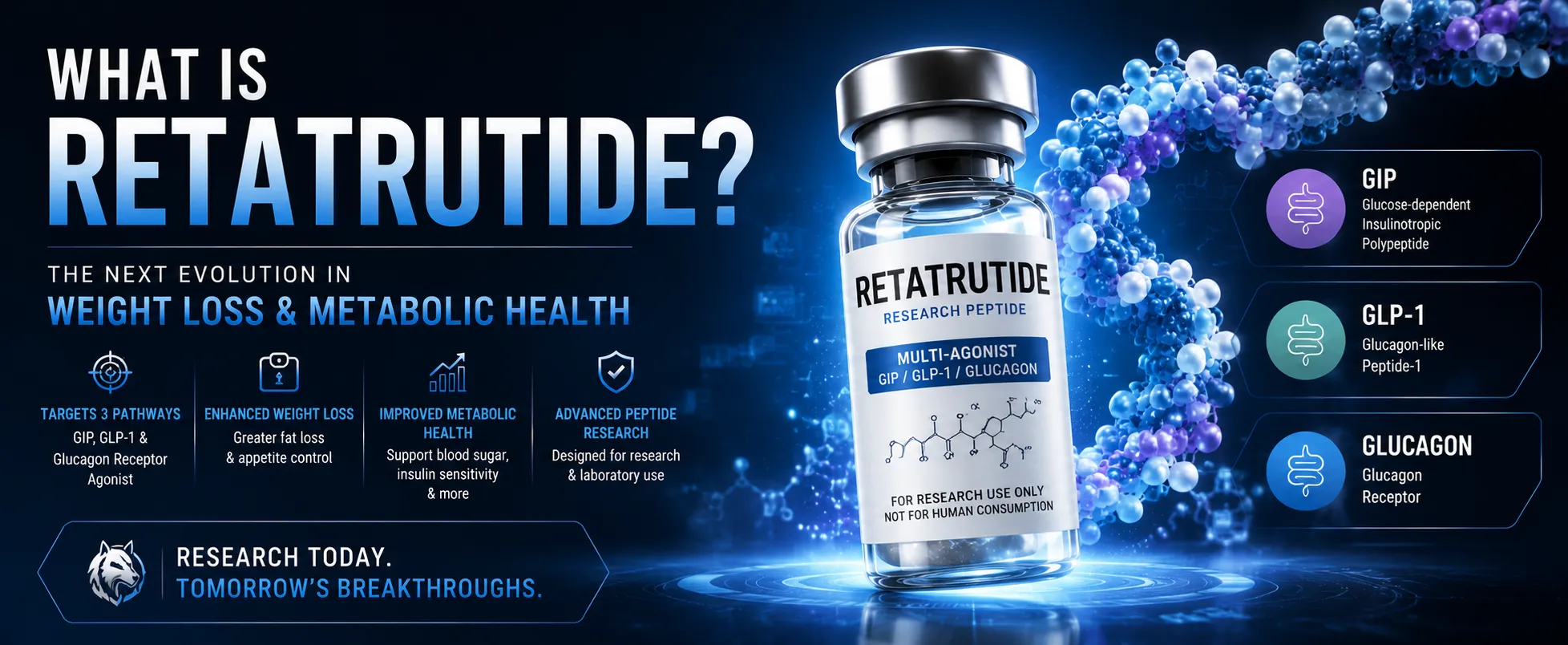
What is Retatrutide?
Retatrutide is a 39-amino-acid peptide engineered as a triple agonist at GLP-1, GIP, and glucagon receptors. It is used in metabolic research to study multi-receptor signalling, energy homeostasis, and incretin biology.

What is MOTS-C?
MOTS-C is a 16-amino-acid peptide encoded within the mitochondrial genome. It regulates metabolic homeostasis, cellular stress responses, and mitochondrial-nuclear communication through AMPK activation.

What is Tesamorelin?
Tesamorelin is a synthetic 44-amino-acid peptide analogue of human growth hormone-releasing hormone (GHRH). It stimulates endogenous growth hormone secretion through activation of the GHRH receptor in the pituitary gland.

What is Ipamorelin?
Ipamorelin is a pentapeptide that functions as a selective growth hormone secretagogue. It stimulates growth hormone release through the ghrelin receptor (GHS-R1a) without significant stimulation of cortisol, prolactin, or other pituitary hormones.

What is Tirzepatide?
Tirzepatide is a 39-amino-acid peptide engineered as a dual agonist at GLP-1 and GIP receptors. It is used in metabolic research to study incretin biology, glucose-dependent insulin secretion, and energy homeostasis.

What is Semaglutide?
Semaglutide is a 31-amino-acid peptide analogue of human glucagon-like peptide-1 (GLP-1) with fatty-acid conjugation for extended half-life. It is used in metabolic research to study GLP-1 receptor signalling, insulin secretion, and energy homeostasis.

What is BPC-157?
BPC-157 is a 15-amino-acid peptide fragment (pentadecapeptide) derived from a protein found in human gastric juice. It is studied in regenerative research for its effects on soft-tissue repair, angiogenesis, and extracellular matrix remodelling in cellular and in vitro models.

What is TB-500?
TB-500 is a synthetic peptide fragment of thymosin beta-4 (Tβ4), a naturally occurring actin-binding protein. It is studied in regenerative research for its effects on cell migration, cytoskeletal dynamics, and tissue remodelling in cellular and in vitro models.

What is GHK-Cu?
GHK-Cu (glycyl-L-histidyl-L-lysine copper) is a naturally occurring copper-binding tripeptide complex. It is studied in regenerative research for its effects on dermal matrix synthesis, cellular proliferation, and extracellular matrix remodelling in cellular and in vitro models.

What is Selank?
Selank is a synthetic heptapeptide (Thr-Lys-Pro-Arg-Pro-Gly-Pro) developed at the Institute of Molecular Genetics in Moscow. It is studied in neuroimmune and neuropharmacological research for its effects on neurotransmitter systems and immune modulation in cellular and in vitro models.

What is Epithalon?
Epithalon (also known as epitalon) is a synthetic tetrapeptide (Ala-Glu-Asp-Gly) developed from studies of the pineal gland's role in biological ageing. It is studied in longevity research for its effects on cellular senescence, telomere biology, and the regulation of biological rhythms in cellular and in vitro models.

What is NAD+?
NAD+ (nicotinamide adenine dinucleotide, oxidised form) is a fundamental biochemical coenzyme found in all living cells. It is essential for cellular energy metabolism, serving as an electron carrier in redox reactions and as a substrate for enzymes including sirtuins and PARPs.

What is Bacteriostatic Water?
Bacteriostatic water is sterile water containing 0.9% benzyl alcohol as a bacteriostatic preservative. It is the standard diluent for reconstituting lyophilised research peptides in laboratory settings.
Our research references contain comprehensive literature reviews, cellular models, and full citation lists.
All glossary entries are for laboratory and in vitro research only. Not for human or animal consumption. Not a medicine, food, cosmetic, or dietary supplement.